Organisational structure as the foundation for control and accountability
Link the organisational structure to regulations and processes
Within QHSE, GRC and compliance processes, clarity about the organisation is essential. Who is responsible for what, which departments are involved and which procedures apply where? Without a recorded organisational structure, ambiguity, fragmentation and disputes over ownership arise. That makes control difficult and increases the risk that measures are not followed up.
From standalone organisation charts to a working model
In many organisations, the organisational structure exists on paper but is not connected to daily practice. Positions, roles and responsibilities are insufficiently linked to processes, documents and tasks. This makes it difficult to consistently manage compliance, access rights and the follow-up of actions.
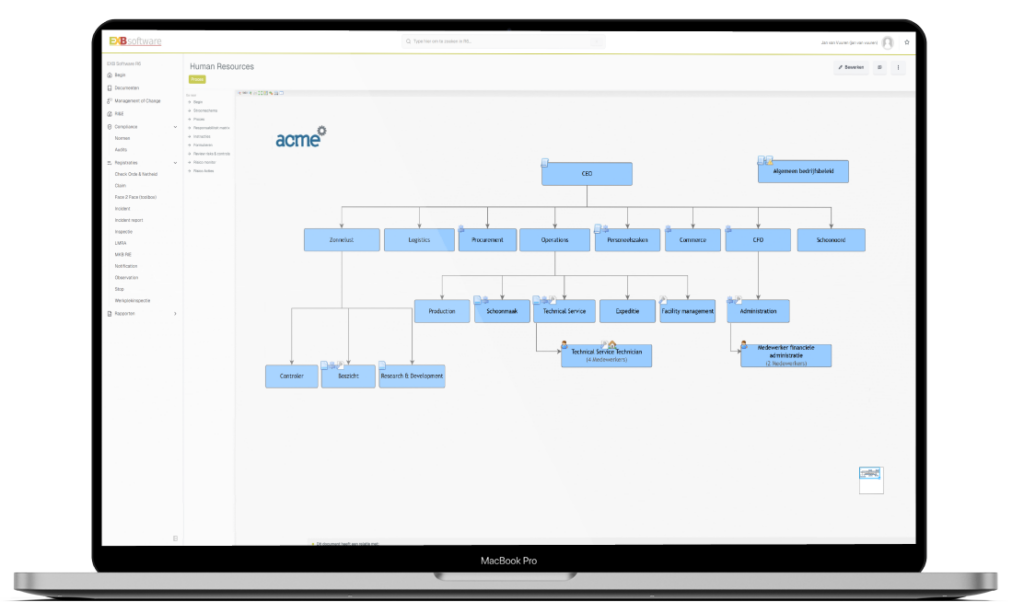
Recording the organisation within EXB Software
With EXB Software, you record the complete organisational structure centrally and in a maintainable way. From group or country structure to sites, departments, hierarchies, positions and individual employees. This structure forms the basis for virtually all other components within the platform.
Among other things, you use the organisational structure for:
- drawing up a RACI matrix for assigning responsibilities and ownership;
- determining roles and access rights;
- making information, documents and procedures available in a targeted way;
- linking processes, workflows and process flows to the right positions and departments.
Linking the organisation to processes, procedures and tasks
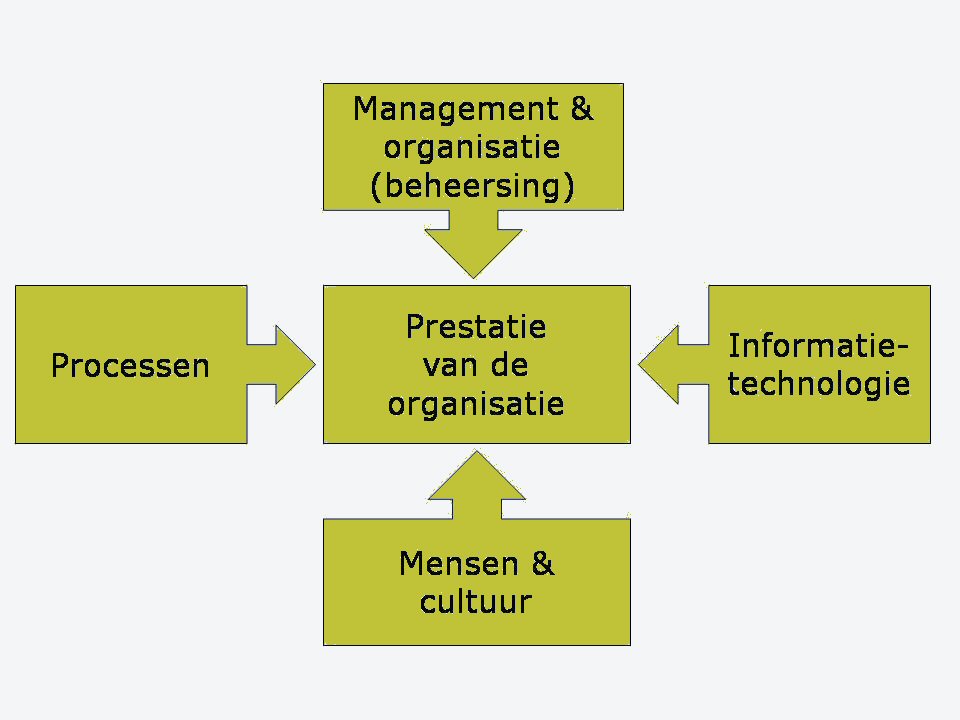
Processes and workflows are linked directly to the relevant parts of the organisation. This means an employee sees only the instructions and processes that apply to their particular role. At the same time, it is always clear who is responsible for approval, execution and follow-up.
Tasks and improvement actions are automatically assigned based on position, department or hierarchy. If the organisational structure changes, the way the system works changes along with it, without you having to set everything up again.
Security and control in a single system
The recorded organisational structure also forms the basis for access security. You determine who may view, modify or approve which information. This supports demonstrable compliance and prevents unwanted access to sensitive information.
Result for your organisation
You have a single, up-to-date and reliable organisational model that not only provides insight but is actually used in daily work. Responsibilities are clear, processes align with practice and information automatically reaches the right people. This creates calm, consistency and demonstrable control within your organisation.