Continuous improvement as a structural process
QHSE and GRC issues never stand still. Laws and regulations change, risks shift, processes grow along with the organisation and incidents yield new insights. Without a structural approach, improvement quickly dilutes into isolated actions, whereas coherence and follow-up are precisely what is needed to maintain demonstrable control over performance and risks.
From intention to demonstrable improvement
Many organisations plan improvement measures carefully but get stuck in execution and follow-up. Actions disappear from view, responsibilities are not clearly assigned and the effect of measures is insufficiently evaluated. As a result, improvement remains fragmentary and the same discussion is held again and again.
Continuous Improvement with EXB Software
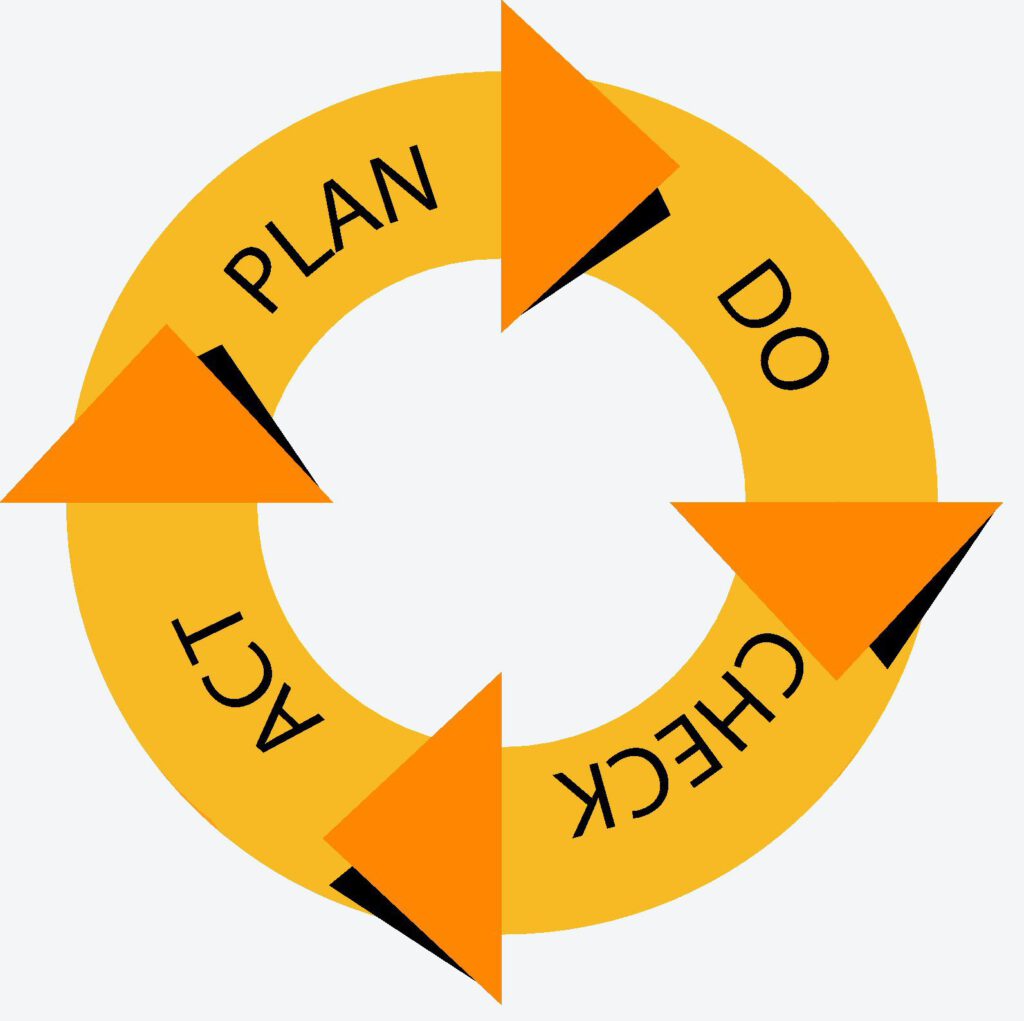
With EXB Software, continuous improvement is structurally embedded in your management system via the Plan-Do-Check-Act cycle (PDCA). This cycle forms the backbone of all QHSE and GRC processes within the platform and ensures that improvement is not a standalone activity but part of daily work.
Specifically, EXB Software supports you with:
- Plan: recording policy, risks, objectives and improvement measures;
- Do: carrying out measures through tasks, workflows and assigned responsibilities;
- Check: verifying results through audits, inspections, reports, dashboards and reports;
- Act: adjusting and recording revised measures.
Integration makes the difference
Because EXB Software offers a single integrated solution, the PDCA cycle does not stop at one module. Improvement actions from incidents, audits or risk analyses are automatically linked to processes, responsible parties and follow-up. Tasks are assigned, deadlines are monitored and escalations are supported by automated workflows.
This creates a closed improvement loop in which nothing is left unaddressed and every step is traceable.
Practical and workable in the organisation
Continuous Improvement only becomes effective if it remains executable. EXB Software prevents extra administrative burden by intelligently reusing existing information and linking improvement actions directly to employees’ daily work. Everyone knows what is expected and what the status is of ongoing improvements.
Result for your organisation
You work demonstrably according to a continuous improvement cycle. Not reactively, but in a controlled and proactive way. Improvement measures are carried out, monitored and adjusted where necessary. This leads to lasting development of QHSE and GRC processes, less recurrence of incidents and more calm and overview in the organisation.